In heavy-duty machinery—whether it’s a crawler crane, a bulldozer, or a specialized forestry harvester—the pivot points are the highest-stress areas of the entire chassis. These joints aren’t just rotating; they are absorbing massive impact loads, resisting misalignment (offset loading), and operating in a slurry of abrasive grit.
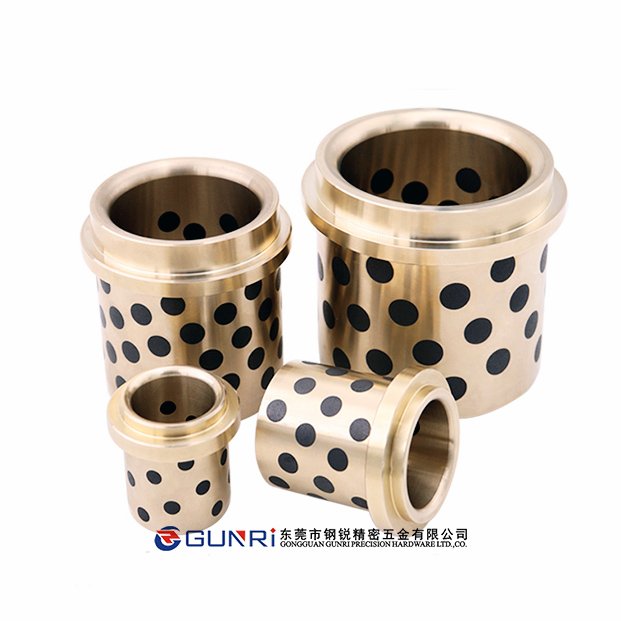
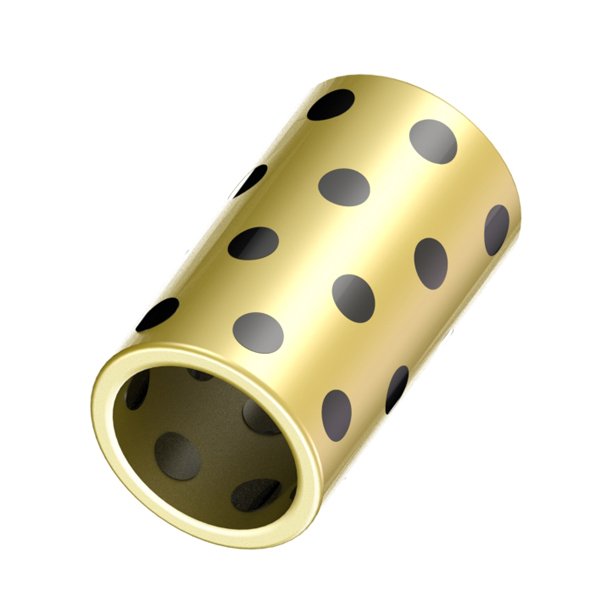
Standard grease-fed steel bushings or delicate needle roller bearings often fail here because they lack the “compliance” and structural toughness required for real-world job sites. This is why graphite bronze bushings (solid lubricant embedded bearings) have become the standard for critical pivot pins. They offer a marriage of high load capacity and a “fail-safe” lubrication system that functions even when the maintenance schedule is ignored.
The Engineering Challenge: Impact and Offset Loading
A pivot point in heavy equipment rarely experiences a “perfect” radial load. When a loader bucket hits an uneven pile of riprap, the force travels through the pins at an angle. This creates offset loading, where the pressure is concentrated on the edges of the bushing rather than distributed evenly across the surface.
Traditional needle bearings or rigid steel sleeves are terrible at handling this. Needle rollers can “skid” or shatter under sudden shock, and hardened steel bushings will simply gall the pin. Manganese bronze, however, has a lower modulus of elasticity than steel. It “gives” just enough to distribute that offset load, while the embedded graphite plugs ensure the friction stays low even during these high-pressure events.
Why Graphite Bronze is Replacing Needle Bearings in Pivots
For years, some OEMs used needle roller bearings in pivots to achieve low starting friction. However, the industry is increasingly moving toward oilless bronze bushings for three practical reasons:
- Shock Absorption: Needle bearings are brittle. A single high-impact “slam” can dent the races (brinelling). Bronze is a “tough” material that absorbs energy rather than cracking.
- Space Efficiency: To handle the same load as a graphite bronze bushing, a needle bearing requires a much larger housing diameter. Oilless bushings allow for a more compact, streamlined joint design.
- Contamination Tolerance: If a seal fails on a needle bearing, sand enters the rollers and the bearing is destroyed in minutes. In a graphite bronze setup, the bronze matrix is “forgiving.” Small particles often get pushed into the soft bronze or swept into the graphite grooves, preventing an immediate seizure of the joint.
Key Selection Factors: Material and Fit
When designing or replacing pivot bushings, the choice of the base alloy determines the lifespan of the joint.
1. Manganese Bronze (C86300) vs. Standard Bronze
For pivot points, I always specify C86300 Manganese Bronze. It offers a static load capacity of up to $100 \text{ N/mm}^2$. If you use a softer tin bronze (like SAE 660), the bushing will eventually “mushroom” under the constant pounding of the hydraulic cylinders, leading to excessive play in the joint.
2. The Graphite Plug Pattern
In a pivot that only oscillates $45^\circ$ or $90^\circ$, the graphite plugs must be arranged so that the lubricant is distributed even with limited rotation. We use a staggered plug pattern to ensure the entire surface of the pin is “wiped” with graphite during the stroke.
3. Surface Finish and Hardness
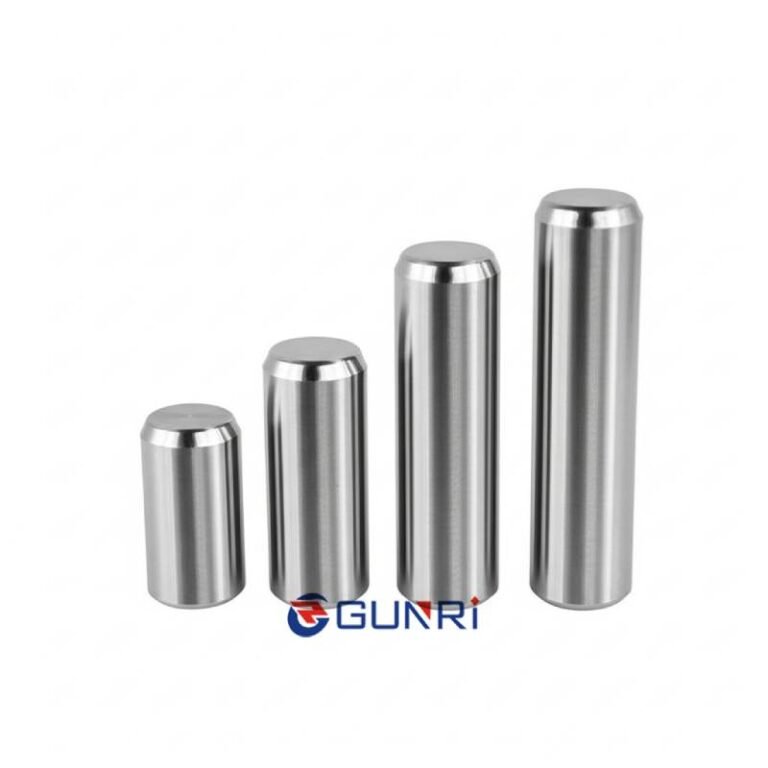
The bushing is only half of the equation. For these to work, the pivot pin must be induction-hardened to HRC 55-60. A soft pin will be “chewed up” by the bronze. The surface finish of the pin should be Ra 0.4 to 0.8. If it’s too smooth, the graphite won’t adhere; if it’s too rough, it will act like a file.
Real Application Scenarios
Excavator Buckets and Linkages
The “H-link” and bucket pivots are constantly submerged in mud and water. Graphite is chemically inert and won’t wash out. While we still recommend seals to keep out large rocks, the self-lubricating nature of the bronze ensures the pin doesn’t weld to the bushing if the grease seals are breached.
Scissor Lifts and Aerial Platforms
These pivots move slowly and sit idle for long periods. Standard grease can dry out and become “gummy,” making the lift jerky and dangerous. Graphite bronze provides a constant, low coefficient of friction (0.05 – 0.15), ensuring the platform rises smoothly every time.
Common Problems: Avoiding Pivot Failure
- Edge Loading: If the pivot ears are misaligned, the load hits the edge of the bushing. If you see the graphite plugs “flaking” at the ends, your joint is misaligned.
- The “Dry Start” Myth: Some think self-lubricating means “install and forget forever.” While they can run dry, a light coat of assembly paste during the first installation helps the graphite transfer film develop much faster.
- Corrosion Seizing: In coastal or high-salt environments, the steel pin can rust inside the bushing if the machine sits for months. Even though the bronze won’t rust, the pin will. Using a chrome-plated or stainless steel pin is the best defense here.
Summary: Stability Over Sophistication
In the world of heavy equipment, simple and rugged wins over complex and fragile. Graphite bronze bushings offer a higher ROI than needle bearings or grease-groove steel because they thrive in the “bad” conditions that kill other bearings. They handle the impact loads, survive the offset loading, and provide an insurance policy against missed maintenance.
If you are currently experiencing premature wear in your pivot joints or looking to simplify your lubrication requirements, a switch to solid-lubricant bronze is likely the answer.
Are you dealing with a specific pivot point failure or looking to optimize a new machine design? Contact our engineering team today for a technical consultation and quote on custom-sized graphite bronze solutions.