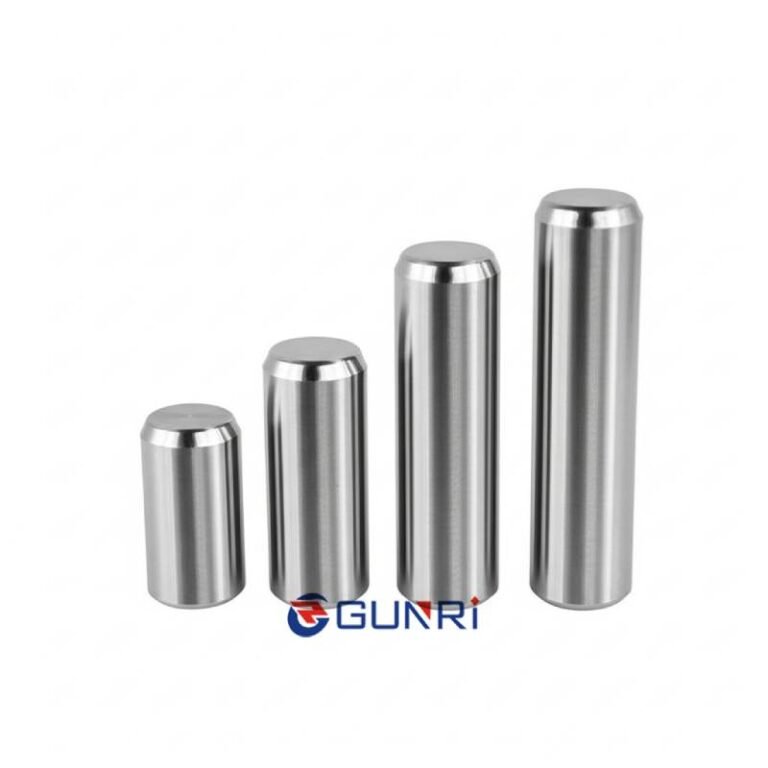
In the high-precision world of plastic injection molding, the guide system is the only thing standing between a perfect part and a catastrophic “crash” of the core and cavity. If your guide posts (leader pins) lose alignment by even a few microns, you’ll see immediate issues: uneven wall thickness, excessive flash, and premature wear on delicate shut-off surfaces.
While ball bearing cages were once the go-to for high-speed molds, the industry has largely shifted toward graphite bronze bushings for the majority of medium-to-heavy production tools. The reason isn’t just cost; it’s the inherent mechanical stability and vibration damping that only a solid sliding bearing can provide.
The Mechanical Role of Mold Guide Posts
The guide system’s job is to align the “A” and “B” halves of the mold before the high-pressure clamping force is applied. During the injection cycle, the mold is subjected to intense thermal expansion and localized internal pressures.
Traditional steel-on-steel or oil-groove bronze bushings require a constant film of grease. However, in a cleanroom or high-heat molding environment, grease is a liability. It can off-gas, migrate into the cavity, and contaminate the plastic parts. Graphite bronze bushings (oilless bushings) eliminate this risk by providing a self-renewing, solid-state lubricant film that stays exactly where it belongs.
Why Graphite Bronze? The Solid Lubricant Advantage
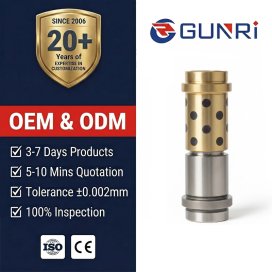
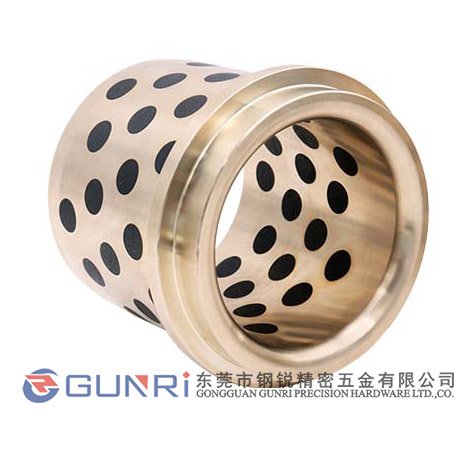
A mold guide bushing typically utilizes a high-strength C86300 Manganese Bronze base. This isn’t your standard hardware-store brass; it’s a rugged alloy with a hardness of HB 210+, specifically designed to resist deformation under the “pounding” of thousands of mold cycles.
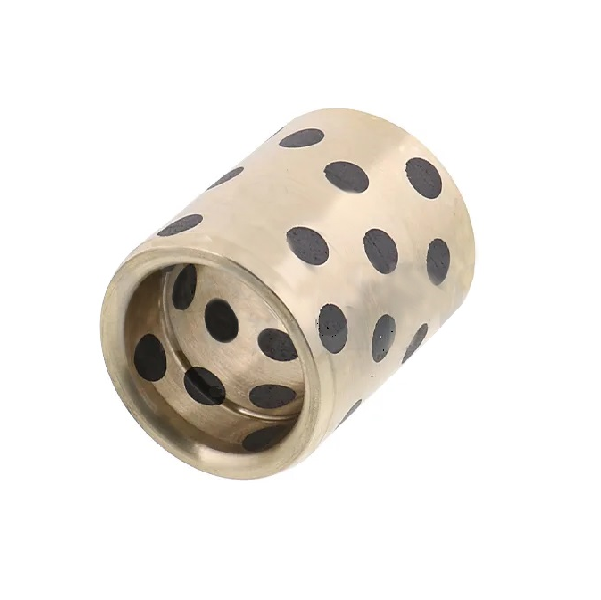
The lubrication comes from the staggered graphite plugs embedded in the bronze wall. As the guide post slides through the bushing, it “wipes” a microscopic layer of graphite onto the steel pin. This creates a low-friction interface that:
- Eliminates “Stick-Slip”: Ensures the mold opens and closes smoothly without the “jerking” motion that can damage delicate lifters or cores.
- Prevents Galling: Even if the mold runs dry for a few cycles, the graphite prevents the metal-to-metal welding (seizing) that kills guide pins.
- Handles Thermal Expansion: Mold plates expand as they heat up. The bronze matrix absorbs localized stresses better than rigid steel-on-steel systems.
Key Selection Factors for Mold Designers
When spec’ing guide components, you have to look at the expected life of the tool and the cycle time.
1. Load Capacity and Surface Pressure
In large molds, the weight of the plates alone can create significant side-loading on the guide posts. Manganese bronze has a high compressive strength, ensuring that the bushing doesn’t “egg out” over time. If you’re building a tool for millions of cycles, the structural integrity of the C86300 base is mandatory.
2. Operating Temperature
Molds for engineering plastics like PEEK or LCP can run at 150°C to 200°C. At these temperatures, standard grease becomes as thin as water and fails. Graphite remains stable up to 300°C+, making it the only reliable choice for high-heat molding applications.
3. Clearance vs. Precision
There is a common misconception that sliding bushings are less precise than ball cages. While ball cages have “zero play,” they also have zero dampening. A graphite bronze bushing, with a standard H7/f7 fit, provides a thin lubricant film that actually helps dampen the vibration of the press, protecting the fine details of the mold.
Comparison: Ball Bearing Cages vs. Graphite Bronze Bushings
| Feature | Ball Bearing Cages | Graphite Bronze Bushings |
|---|---|---|
| Precision | Highest (Zero clearance) | High (Required running clearance) |
| Load Bearing | Low (Point contact) | Very High (Surface contact) |
| Vibration Damping | Poor | Excellent |
| Maintenance | High (Must be kept perfectly clean) | Minimal (Self-lubricating) |
| Durability | Fragile (Risk of “brinelling”) | Rugged (Handles shock loads) |
| Cost | High | Moderate |
In high-speed, light-load packaging molds, ball cages are excellent. However, for automotive, appliance, or industrial parts where the mold plates are heavy and side-loads are common, the graphite bronze bushing is far more durable and “forgiving” of real-world press conditions.
Application Scenarios: Where Stability is King
Multi-Cavity Precision Tools
In a 32-cavity tool, the cumulative thermal expansion is significant. Graphite bronze bushings allow for a tiny amount of “give” that prevents the guide pins from binding when the mold reaches its operating soak temperature.
Large Automotive Molds
For bumper or dashboard molds, the sheer weight of the core can deflect the guide pins. The surface-area contact of a bronze bushing distributes this load much better than the point-contact of a ball bearing, preventing the “grooving” of the guide posts.
Cleanroom Medical Molding
When grease is forbidden, oilless bushings are the only option. They provide the necessary guide accuracy without the risk of aerosolized oil particles contaminating the sterile molding environment.
Common Mistakes in Guide System Maintenance
Even though these are “oilless,” they aren’t indestructible.
- The “Dirty Pin” Problem: If the guide pins are covered in dust or metallic grit, the abrasive particles will get trapped in the soft bronze and act like sandpaper. Always wipe the guide pins clean during routine mold maintenance.
- Soft Guide Posts: Never use a soft steel pin. Your guide posts must be hardened to at least HRC 58-62. If the pin is softer than the bronze, the “self-lubricating” action won’t happen; instead, the pin will simply wear down.
- Misalignment During Assembly: If the mold plates aren’t perfectly centered when the bushings are pressed in, you’ll get “edge loading.” This causes the graphite plugs at the ends of the bushing to crumble prematurely.
Summary
The decision to use graphite bronze bushings in mold guide posts comes down to long-term stability and reliability. While ball cages offer a “tighter” feel, they are often too fragile for the heavy-duty realities of a 24/7 molding shop.
By using a self-lubricating system, you eliminate the biggest variable in mold wear—human error in greasing—and you protect the precision of your tool’s shut-offs. For most industrial mold builds, the durability and vibration-damping of manganese bronze with graphite inserts provide the best balance of precision and tool life.
When you’re designing your next tool, look at the weight of your plates and your operating temp. If you’re dealing with anything heavier than a small prototype tool, graphite bronze is likely the safest “insurance policy” for your guide system.