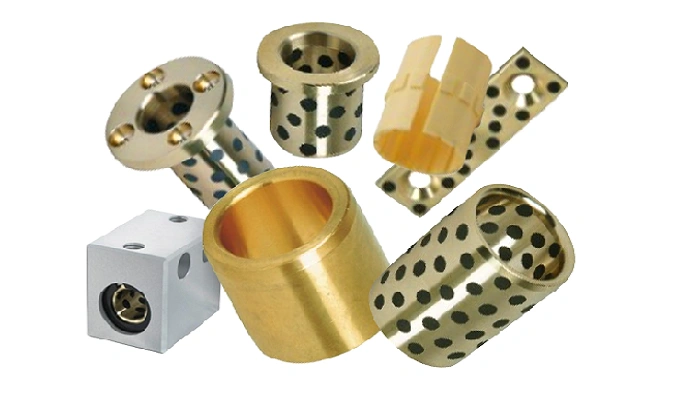
Bronze sleeve bearings—also known as bronze bushings or plain bearings—remain a critical component in modern mechanical systems despite the widespread adoption of rolling bearings. Their ability to operate reliably under high loads, shock conditions, contaminated environments, and limited lubrication makes them indispensable across heavy industry, automation, construction equipment, and transportation systems.
This guide provides an engineering-focused, application-driven explanation of bronze sleeve bearings, covering material selection, PV load calculation, design guidelines, failure prevention, and real-world applications. It is written for engineers, designers, and procurement professionals who need to select or specify bronze sleeve bearings with confidence.
What Are Bronze Sleeve Bearings?
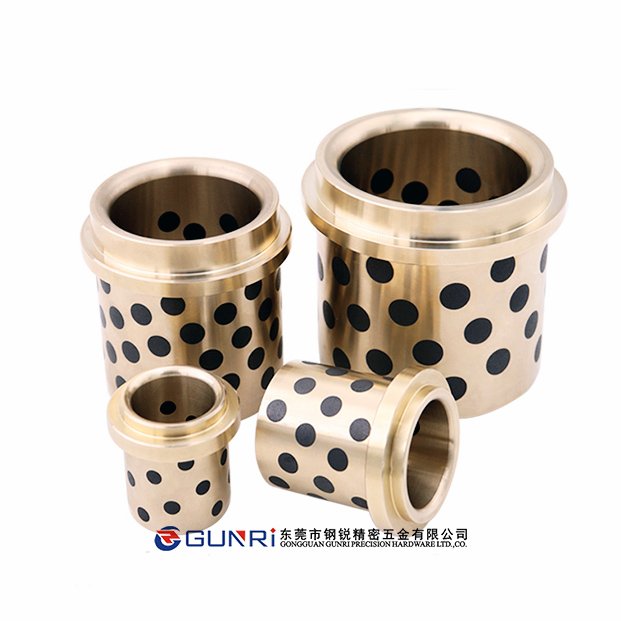
Bronze sleeve bearings are cylindrical plain bearings manufactured from bronze alloys and designed to support radial loads through sliding contact between the bearing surface and the shaft. Unlike ball or roller bearings, they contain no rolling elements, relying instead on a lubricating film—oil, grease, or solid lubricant—to minimize friction and wear.
Their simple construction results in:
- High load-carrying capacity
- Excellent shock resistance
- Quiet operation
- Long service life in harsh environments
Because of these characteristics, bronze sleeve bearings are frequently chosen where rolling bearings would fail prematurely or require excessive maintenance.
Why Choose Bronze Sleeve Bearings?
Despite advances in polymer and rolling bearing technologies, bronze sleeve bearings continue to be preferred in many demanding applications for several reasons.
High Load and Shock Resistance
Bronze alloys exhibit excellent compressive strength, allowing sleeve bearings to support higher static and dynamic loads than many rolling bearings of similar size.
Tolerance to Contamination
Dust, debris, and moisture that would damage rolling elements are often tolerated by bronze sleeve bearings, especially in grease-lubricated or solid-lubricated designs.
Low-Speed Reliability
In low-speed or oscillating motion, rolling bearings struggle to maintain lubrication films. Bronze sleeve bearings perform reliably in these conditions.
Cost and Simplicity
With fewer components and straightforward installation, bronze sleeve bearings often offer a lower total cost of ownership, particularly in heavy-duty or low-maintenance systems.
Bronze Sleeve Bearing Materials: Engineering Trade-Offs

Selecting the correct bronze material is critical. Each alloy offers specific advantages and limitations depending on load, speed, temperature, and lubrication.
Common Bronze Bearing Materials
SAE 660 (C93200 / Leaded Tin Bronze)
- Excellent conformability and embeddability
- Good for moderate loads and speeds
- Requires lubrication
- Widely used in industrial machinery
Aluminum Bronze
- Very high strength and load capacity
- Excellent corrosion resistance
- Suitable for shock loads
- Lower embeddability than leaded bronzes
Oil-Impregnated Sintered Bronze
- Self-lubricating under light to moderate loads
- Best for continuous operation at low speeds
- Limited load and temperature capability
Graphite Plugged Bronze Bearings
- Designed for dry or boundary lubrication
- Ideal for high-load, low-speed applications
- Common in steel mills, construction equipment, and high-temperature environments
Material Selection Summary
| Application Condition | Recommended Bronze |
|---|---|
| Moderate load, lubricated | SAE 660 |
| High load, impact | Aluminum Bronze |
| Maintenance-free, low load | Oil-impregnated bronze |
| Dry operation, heavy load | Graphite plugged bronze |
Understanding PV Value in Bronze Sleeve Bearings
One of the most critical yet misunderstood concepts in sleeve bearing selection is the PV value.
What Is PV Value?
PV is the product of:
- P (Pressure): Load per unit projected area
- V (Velocity): Surface speed of the shaft
[PV = P \times V]
Each bronze alloy has a maximum allowable PV limit. Exceeding this limit results in overheating, lubricant breakdown, and accelerated wear.
Step-by-Step PV Calculation Example
- Determine load (N or lbs)
- Calculate projected bearing area
- Area = Bearing ID × Bearing Length
- Calculate pressure (P)
- Calculate shaft surface speed (V)
- Multiply P × V
- Compare with material PV limit
This calculation is often more important than load alone and is a primary reason why improperly selected bronze bearings fail prematurely.
Design Guidelines for Bronze Sleeve Bearings
Proper design significantly extends bearing life and performance.
Shaft and Bearing Clearance
- Too tight: risk of seizure
- Too loose: vibration and uneven wear
- Clearance must account for thermal expansion
Shaft Surface Finish
- Recommended Ra: 0.4–0.8 μm
- Rough shafts accelerate wear
- Over-polished shafts may prevent lubricant retention
Bearing Wall Thickness
- Thin walls reduce load capacity
- Excessively thick walls increase cost without benefit
- Design must balance strength and heat dissipation
Lubrication Grooves
- Not always required
- Groove design should avoid reducing load-bearing area excessively
Bronze Sleeve Bearings vs Other Bearing Types
Sleeve Bearings vs Ball Bearings
- Sleeve bearings excel at high loads and low speeds
- Ball bearings perform better at high speeds with clean lubrication
Sleeve Bearings vs Polymer Bushings
- Bronze offers superior temperature and load capacity
- Polymers provide corrosion resistance and low noise under light loads
Understanding these trade-offs ensures the bearing type aligns with operational realities.
Common Failure Modes and How to Prevent Them
Seizure
Caused by insufficient clearance or lubrication failure
Prevention: Proper clearance calculation and lubricant selection
Excessive Wear
Often due to shaft roughness or contamination
Prevention: Proper shaft finishing and sealing
Uneven Wear
Results from misalignment
Prevention: Correct housing and shaft alignment
Learning from these failure mechanisms is essential for long-term reliability.
Typical Applications and Recommended Materials
- Construction Equipment: Graphite plugged bronze
- Industrial Gearboxes: SAE 660
- Agricultural Machinery: Aluminum bronze
- Automation Equipment: Oil-impregnated bronze
Matching application conditions to material properties is the key to durability.
How to Specify Bronze Sleeve Bearings for Manufacturing
When ordering bronze sleeve bearings, engineers should clearly define:
- Material specification
- Inner and outer diameter tolerances
- Bearing length
- Surface finish requirements
- Operating conditions (load, speed, temperature)
Clear specifications ensure consistent quality and predictable performance, especially in volume production.
Frequently Asked Questions
Are bronze sleeve bearings the same as bronze bushings?
Yes. The terms are often used interchangeably in industry.
Do bronze sleeve bearings require lubrication?
Most do, except oil-impregnated and graphite-plugged designs.
How long do bronze sleeve bearings last?
With proper selection and installation, service life can exceed many rolling bearing alternatives.
Conclusion
Bronze sleeve bearings remain a proven, versatile solution for demanding mechanical applications. By understanding material properties, PV limitations, and proper design practices, engineers can achieve exceptional reliability and cost efficiency.
When selected and specified correctly, bronze sleeve bearings are not merely an alternative to rolling bearings—they are often the superior engineering choice.